Introduction: Where Water Becomes a Way of Life
In the northeastern corner of Bangladesh lies a landscape that defies conventional geography. Here, land disappears beneath water for half the year, villages float like mirages, and the horizon stretches endlessly across shimmering wetlands. This is Tanguar Haor, one of Bangladesh’s most extraordinary natural treasures and a globally significant wetland ecosystem.
anguar Haor is not merely a destination—it is an experience shaped by water, wind, birds, and human resilience. For travelers, it offers raw beauty and silence rarely found elsewhere. For scientists and environmentalists, it represents a critical ecological zone. For local communities, it is life itself: a source of food, culture, tradition, and survival.
Exploring Tanguar Haor is a journey into the heart of Bangladesh’s wetland heritage, where nature and humanity exist in a delicate, ever-shifting balance.
Understanding Tanguar Haor: Geography and Location
Tanguar Haor is located in Dharmapasha and Tahirpur upazilas of Sunamganj District, in the Sylhet Division of northeastern Bangladesh. Covering an area of approximately 9,727 hectares, the haor consists of more than 120 interconnected beels (lakes) and seasonal floodplains.
The haor lies at the foothills of the Meghalaya Plateau of India, which plays a crucial role in shaping its ecology. During the monsoon, rainfall from the hills causes water levels to rise dramatically, transforming the entire area into a vast inland sea. In the dry season, water recedes, revealing fertile land, grazing fields, and village pathways.
This seasonal transformation defines every aspect of life in Tanguar Haor.
A Ramsar Site of Global Importance
In 2000, Tanguar Haor was declared a Ramsar Wetland of International Importance, recognizing its ecological significance on a global scale. This designation highlights the haor’s role in:
-
Supporting migratory waterfowl
-
Maintaining freshwater biodiversity
-
Regulating local climate and hydrology
-
Sustaining livelihoods for thousands of people
Each winter, the haor becomes a sanctuary for tens of thousands of migratory birds traveling from Siberia, Central Asia, and beyond. The wetlands serve as a feeding and resting ground, making Tanguar Haor one of the most important bird habitats in South Asia.
Seasonal Transformations: Two Worlds in One Landscape
The Monsoon (June–October): The Floating World
During the monsoon, Tanguar Haor becomes a boundless expanse of water. Roads vanish, fields drown, and boats become the only mode of transportation. Villages appear as small islands, with houses built on raised platforms or earthen mounds.
This is the most visually dramatic time to explore the haor. The sky and water merge into one, broken only by lines of boats, clusters of water hyacinths, and distant hills. Storms can rise suddenly, and the haor’s beauty often comes with an edge of danger.
The Dry Season (November–April): The Revealed Earth
As water levels recede, the haor transforms again. Vast grasslands emerge, farmers plant crops, and fishermen repair nets along shrinking waterways. Migratory birds arrive in massive numbers, filling the wetlands with sound and movement.
This season offers easier travel, cooler weather, and the best opportunities for birdwatching and cultural exploration.
Biodiversity: A Wetland Alive with Species
Birdlife: A Migratory Paradise
Tanguar Haor is best known for its incredible bird diversity. More than 200 species of birds have been recorded here, including:
-
Northern Pintail
-
Gadwall
-
Common Teal
-
Ferruginous Duck
-
Asian Openbill Stork
-
Purple Heron
-
Pallas’s Fish Eagle
In winter, the sky often darkens with flocks taking flight at dawn and dusk. The soundscape—wings beating, calls echoing across water—creates a natural symphony unlike anywhere else in Bangladesh.
Fish and Aquatic Life
The haor is home to over 140 species of freshwater fish, many of which are vital to local food security. Indigenous species such as Rui, Katla, Boal, and various small fish thrive in the interconnected beels.
Aquatic plants like lotus, water lilies, and submerged grasses provide shelter and breeding grounds for fish and invertebrates.
Flora: Subtle but Essential
Though not forested, Tanguar Haor’s vegetation plays a crucial ecological role. Reed beds, swamp grasses, and seasonal plants stabilize soil, filter water, and support wildlife. During the dry season, grazing lands emerge, supporting cattle and goats.
Life on the Haor: Communities and Culture
The Haor People
Thousands of people live in and around Tanguar Haor, primarily dependent on fishing, agriculture, and livestock. Their lives are shaped entirely by the water cycle.
Children often learn to swim before they can properly walk. Boats are family possessions, passed down through generations. Seasonal migration is common, with families moving to safer areas during extreme flooding.
Livelihoods
-
Fishing: The primary source of income, especially during monsoon months
-
Boro Rice Cultivation: Grown in the dry season on fertile haor soil
-
Duck Rearing: Ducks thrive in wetland conditions
-
Boat Making and Net Weaving: Traditional skills still widely practiced
Despite their deep knowledge of the ecosystem, haor communities remain economically vulnerable, often facing poverty, natural disasters, and limited access to education and healthcare.
Exploring Tanguar Haor: The Travel Experience
Journey to the Haor
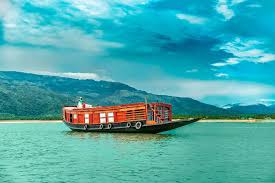
Most travelers begin their journey from Sylhet city, traveling by road to Sunamganj and then onward to Tahirpur. From there, exploration continues by boat—usually a traditional wooden engine boat.
The boat journey itself is a highlight, offering uninterrupted views of water, sky, and distant hills.
Boat Life and Overnight Stays
Many visitors choose to stay overnight on boats equipped with basic sleeping arrangements. Nights on the haor are quiet and profound, broken only by water sounds and distant bird calls.
Waking up at dawn to watch the sun rise over the wetlands is one of the most memorable experiences Tanguar Haor offers.
Responsible Tourism: Protecting a Fragile Ecosystem
Unregulated tourism and overfishing have posed threats to Tanguar Haor in the past. Plastic waste, engine noise, and illegal hunting have impacted wildlife.
Responsible exploration requires:
-
Avoiding loud music and disturbances
-
Not feeding or chasing birds
-
Carrying back all waste
-
Supporting local guides and boatmen
-
Respecting fishing zones and sanctuaries
Eco-tourism initiatives, when managed properly, can provide alternative income for local communities while preserving the wetland’s integrity.
Conservation Challenges and Efforts
Threats
-
Overfishing and illegal nets
-
Climate change and erratic rainfall
-
Siltation from upstream erosion
-
Encroachment and unplanned development
Conservation Initiatives
Government agencies, NGOs, and community-based organizations have worked to establish fish sanctuaries, seasonal fishing bans, and co-management systems involving local people.
Long-term protection depends on balancing human needs with ecological sustainability.
Spiritual and Emotional Dimensions of the Haor
Beyond science and scenery, Tanguar Haor offers something deeply emotional. The vastness creates humility. The silence encourages reflection. Life here feels slower, more elemental, and profoundly connected to nature.
For many visitors, the haor becomes a place of inner stillness—a reminder of how closely human existence is tied to water and land.
Best Time to Explore Tanguar Haor
-
November–February: Best for birdwatching and pleasant weather
-
March–April: Clear skies and cultural exploration
-
June–September: For adventurous travelers who want to experience the monsoon landscape (with caution)
Conclusion: A Wetland Worth Protecting
Tanguar Haor is not just a destination—it is a living system, a cultural landscape, and a natural classroom. Its beauty lies not in monuments or luxury, but in rhythms: rising water, flying birds, working boats, and resilient people.
To explore Tanguar Haor is to witness a world where nature still leads the narrative. Protecting it is not only Bangladesh’s responsibility but a global one. As climate change accelerates and wetlands disappear worldwide, places like Tanguar Haor remind us of what is at stake—and what is still possible when humanity chooses coexistence over exploitation.